










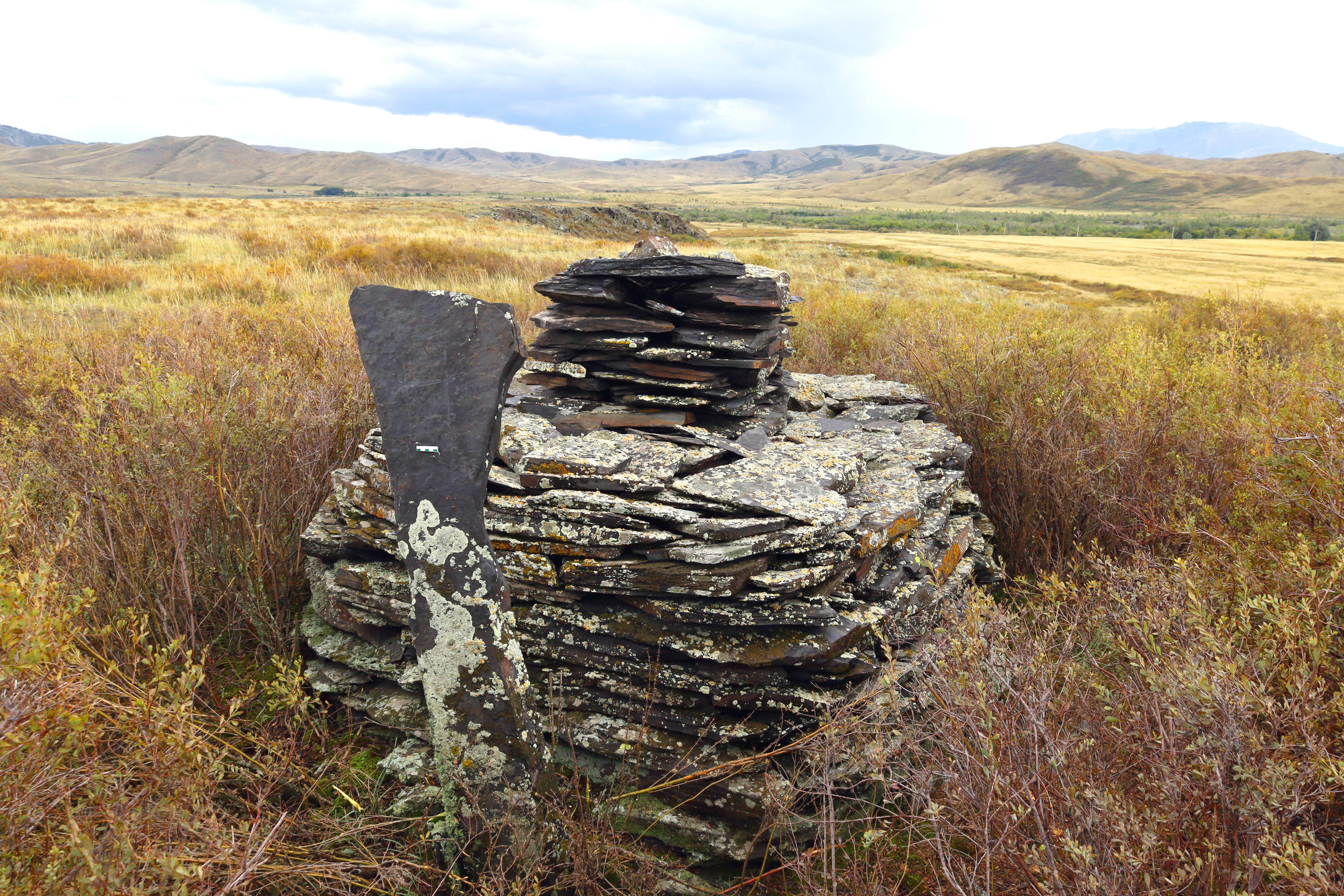
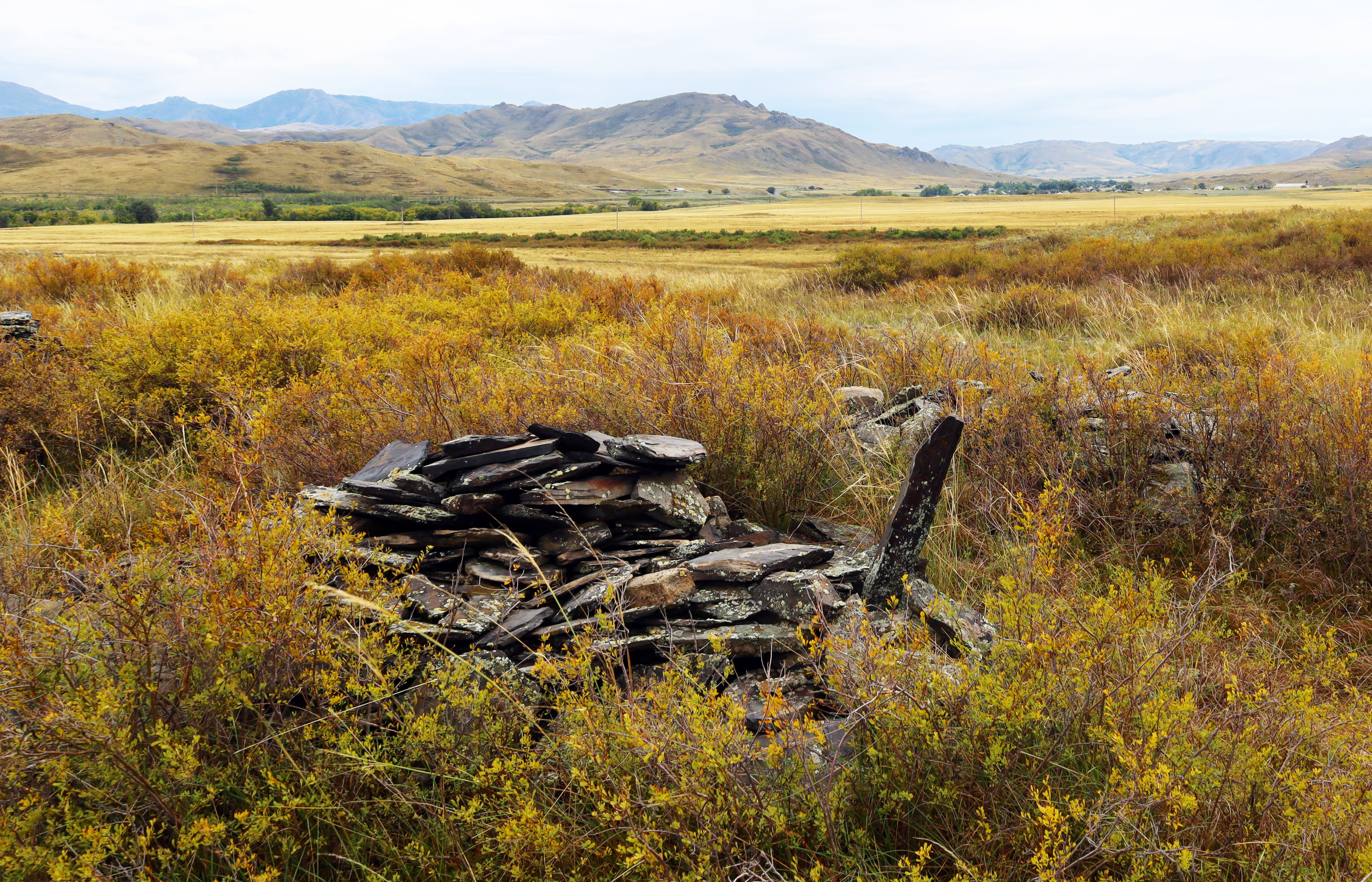
In the Ulan District of the East Kazakhstan Region, approximately 1.5 km northwest of the village of Bayash Utepov, in close proximity to the left bank of the Esir River, an old Kazakh cemetery tentatively dated to the 18th–19th centuries was identified.
Among the funerary structures recorded within the cemetery, two vertically set gravestones made of dark slate are of particular interest. Epigraphic inscriptions are either absent or have not survived; however, signs executed by shallow incision are clearly visible on their surfaces.
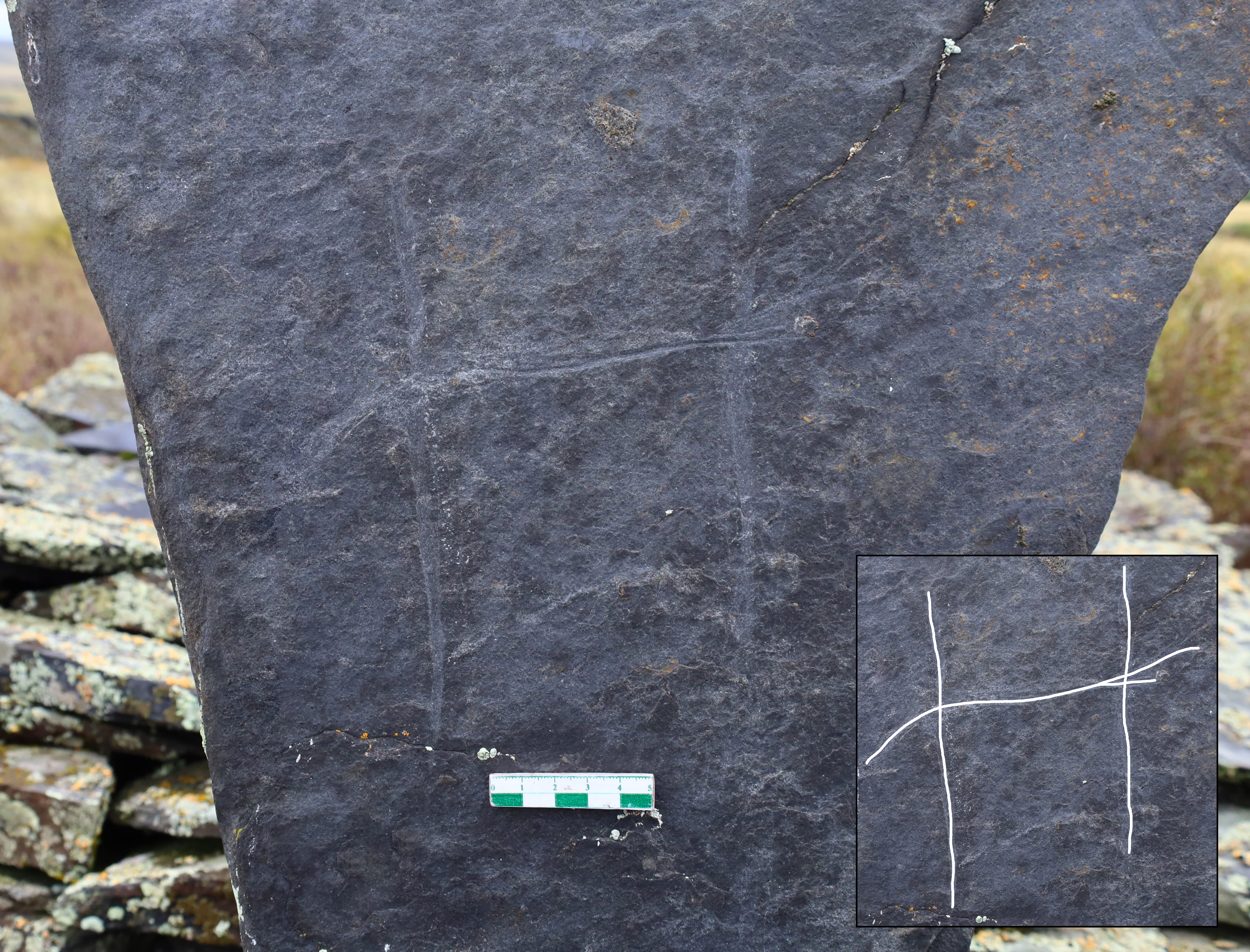
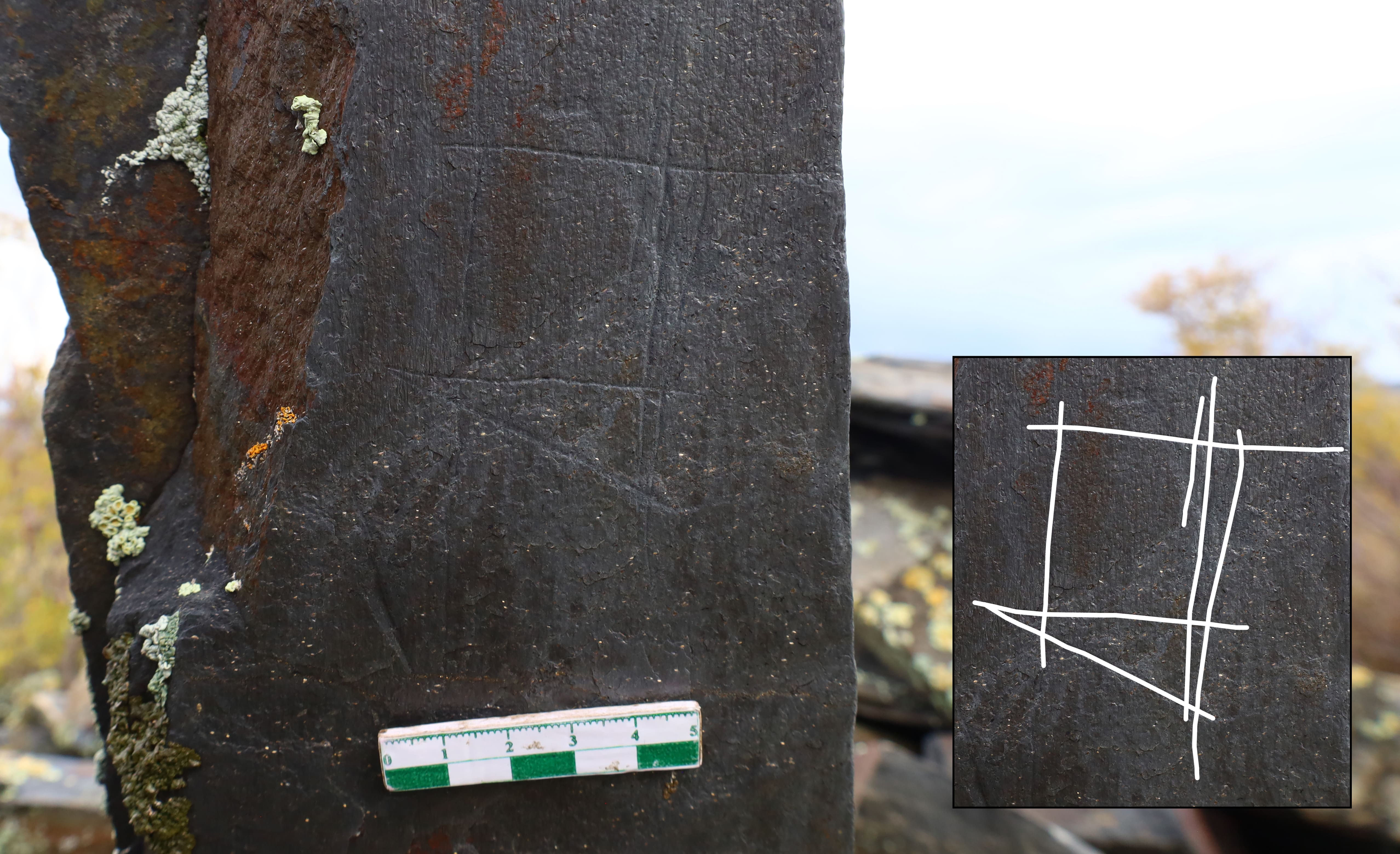
The dimensions of the sign on the first gravestone are 18.59 × 16.21 × 16.74 cm, while those of the sign on the second gravestone are 6.21 × 5.45 × 6.76 × 5.24 cm.
The signs were applied to the relatively even surfaces of the gravestones by shallow incision using a sharp metal tool. As a result of prolonged exposure to natural processes, particularly weathering and lichen growth, some elements of the images have partially lost their original clarity. Nevertheless, their principal graphic outlines and compositional structure remain sufficiently well preserved for visual documentation and further analysis.
Both gravestones bear signs that display similarities in their graphic form and are composed primarily of intersecting lines. The first sign resembles the letter “H” in its configuration, whereas the second has a grid-like form.
The occurrence of similar graphic elements on two adjacent gravestones likely indicates that they were intentionally applied and carried a specific symbolic meaning. Taking into account their archaeological context and graphic characteristics, these signs may be interpreted as the clan tamgas of the deceased.
https://berelmuseum.kz/en/data-base/ulan-district/842-gravestones-with-tamgas-in-the-vicinity-of-the-village-of-bayash-utepov.html#sigFreeIdd7091a0296