








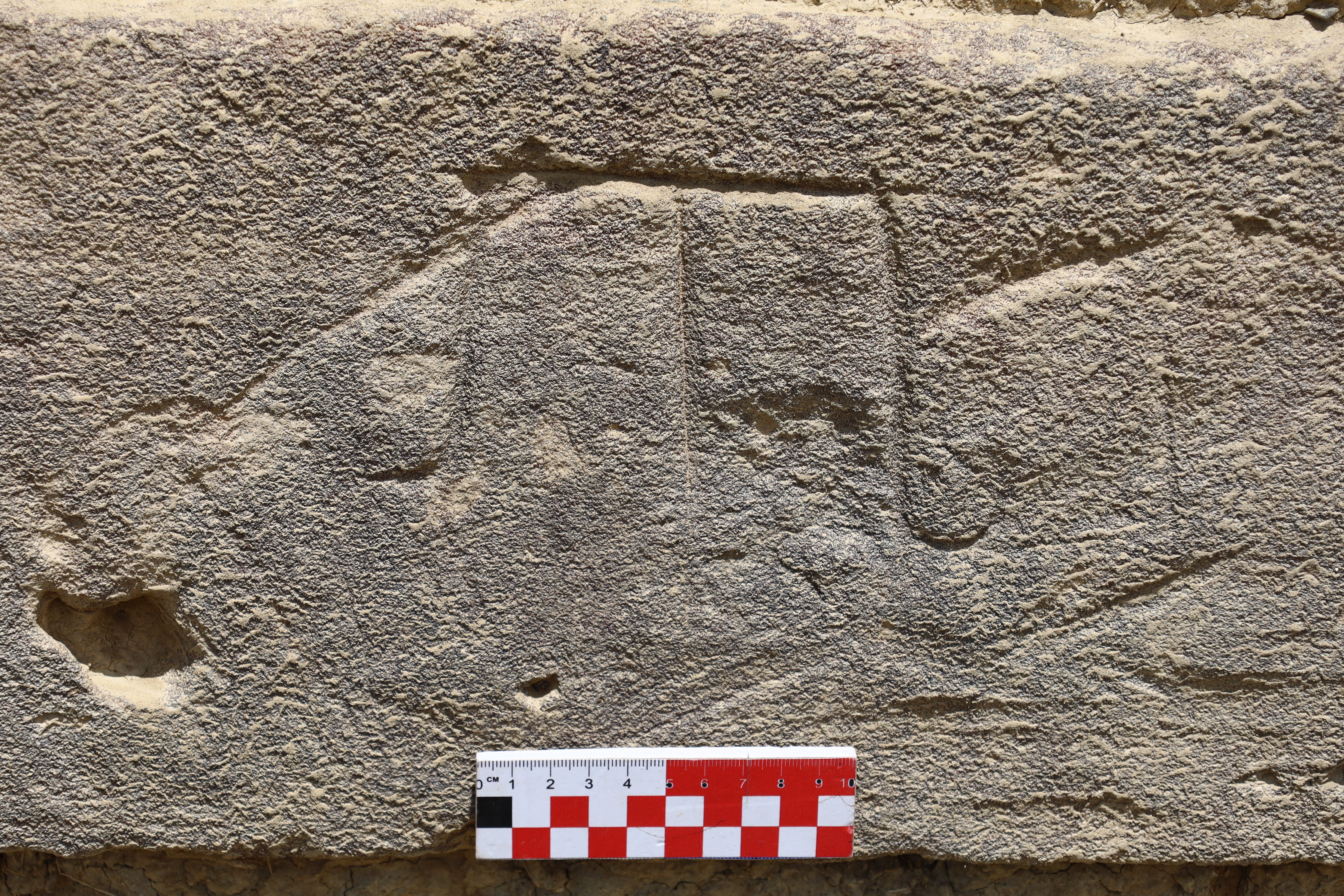
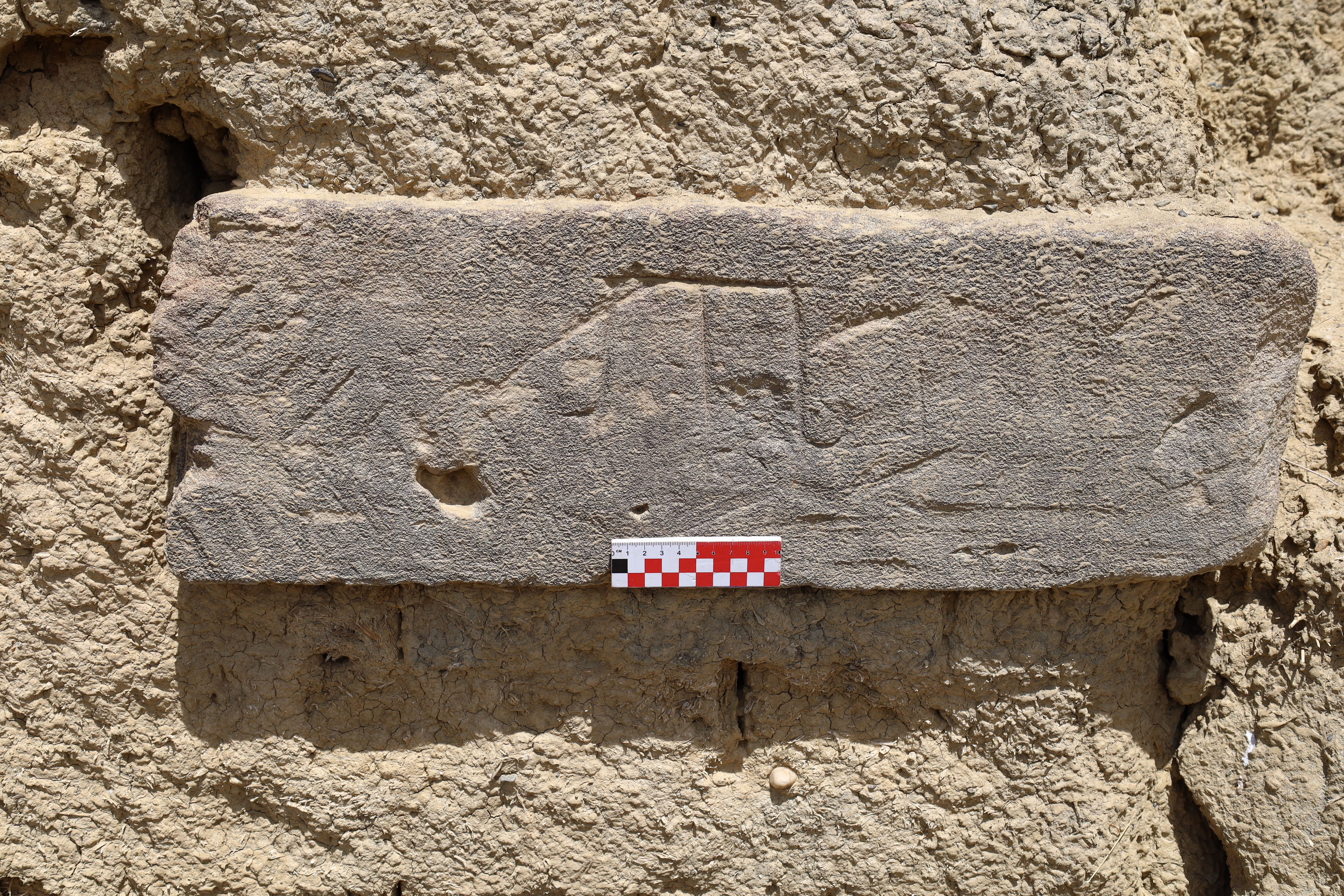
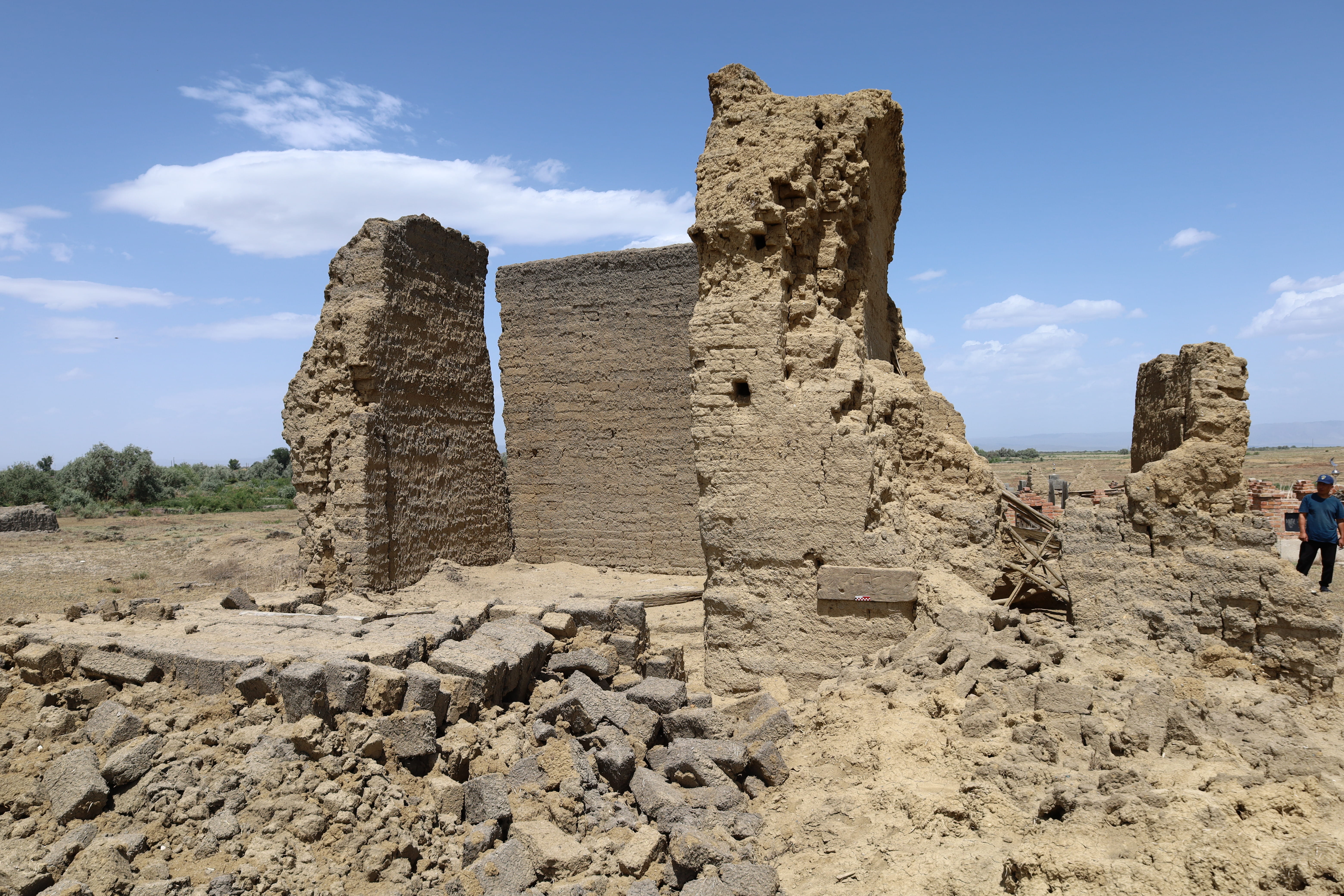
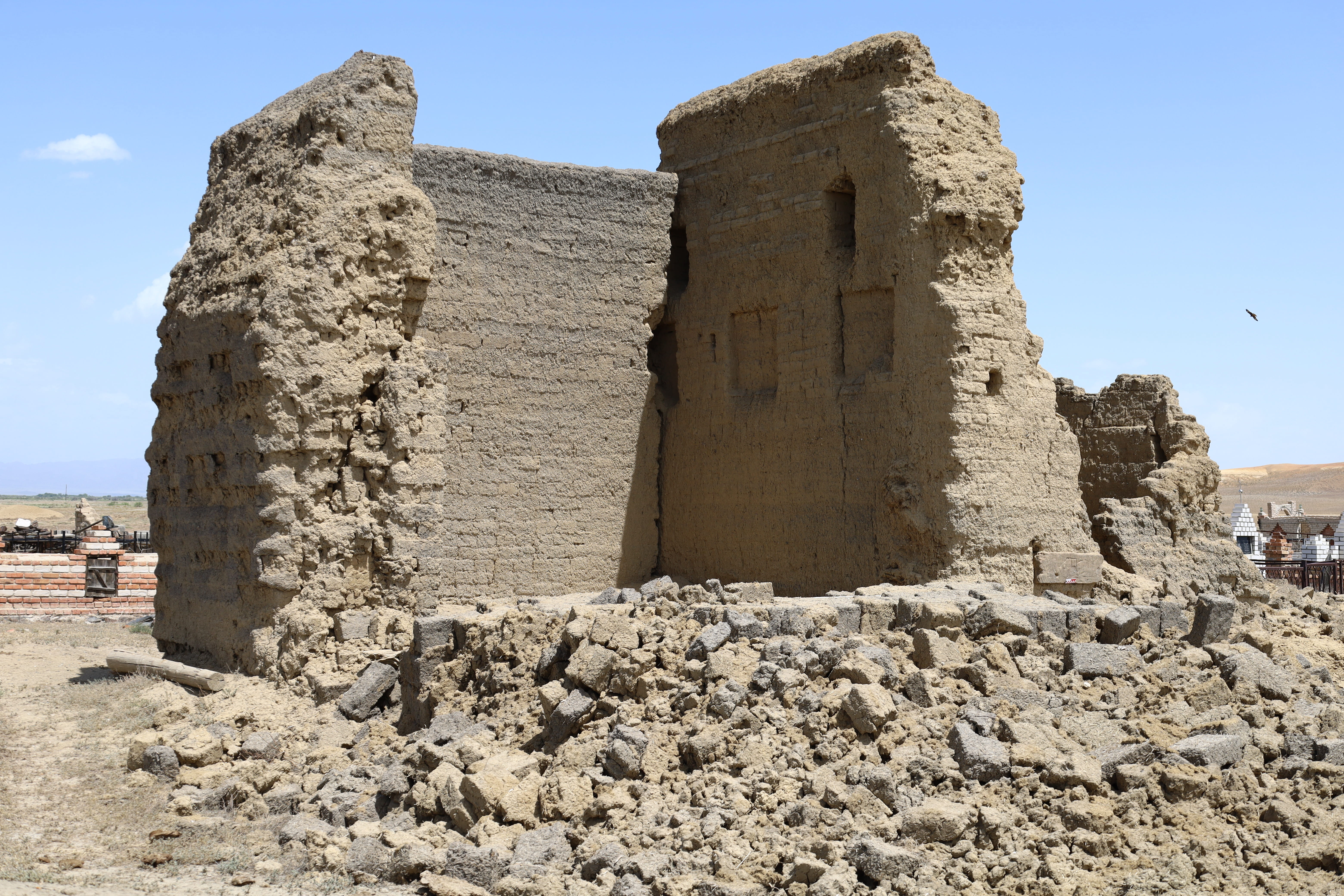
The site is located approximately 1 km south of the village of Zhideli. Within a Muslim cemetery, a domed mausoleum constructed of adobe bricks was documented. It is known among local residents as the “Quleke Mausoleum” (Quleke beiiti). The structure dates to the nineteenth century and is currently in a poor state of preservation. In the lower left section of the front wall, a gravestone bearing a taraq (“comb”) tamga, symbolizing affiliation with the Töre lineage, was identified within the adobe masonry. The stone is incorporated directly into the wall and measures approximately 70 × 30 cm. The tamga was executed by carving; the image measures approximately 10 cm in height and 15 cm in length.
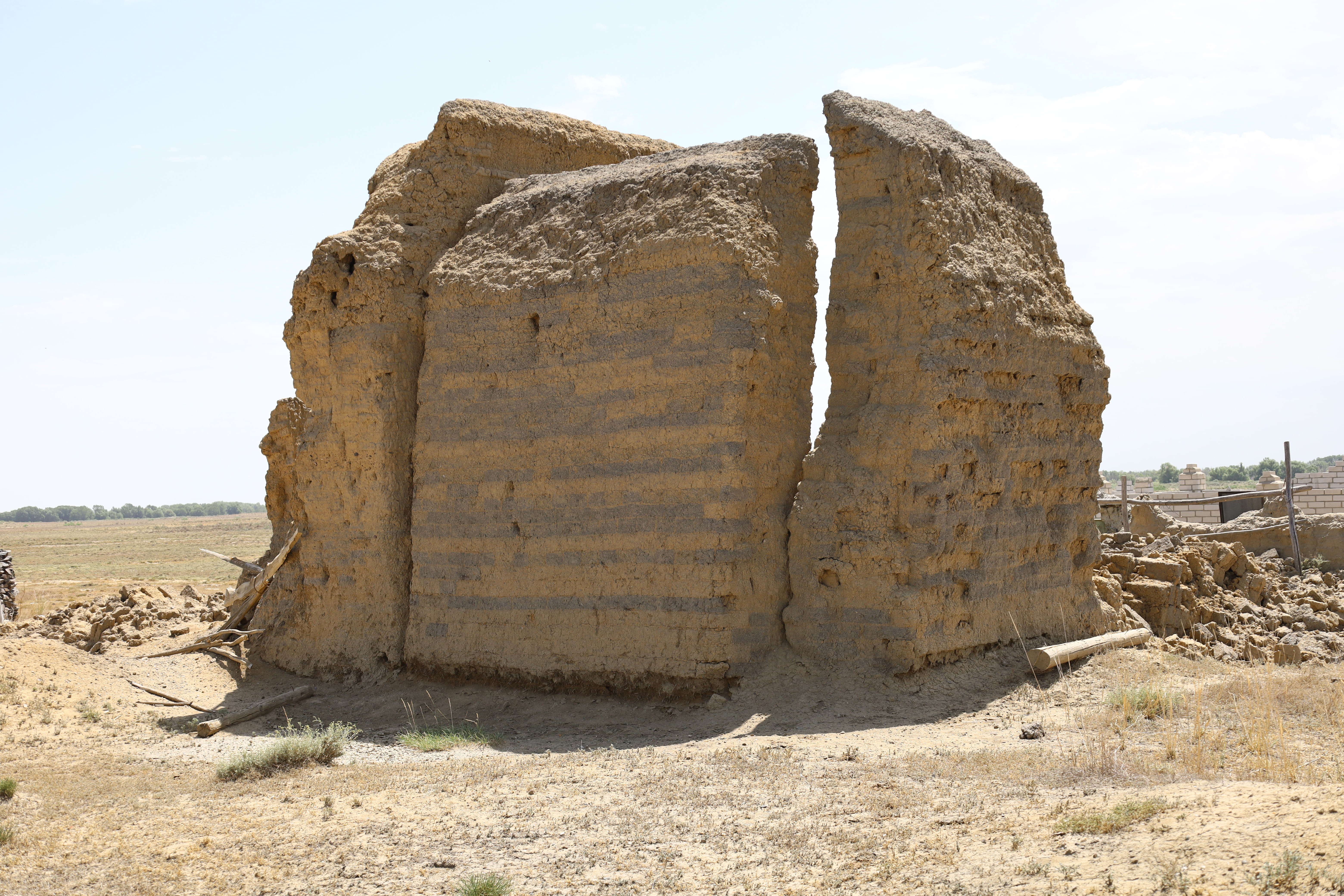
The mausoleum is built of adobe bricks and measures approximately 8 × 4 m. Its interior is divided into two chambers, each of which probably had a separate entrance. The walls are up to 1 m thick. The upper part of the structure originally had a domed form, although the roof has collapsed over time. A rectangular opening measuring approximately 1 × 0.7 m is located in the partition wall between the two chambers. The adobe bricks used in the masonry measure approximately 30 × 20 × 10 cm. According to local oral tradition, the bricks were produced using a special technique in which mare’s milk and horsehair were added to the clay.
Historical accounts indicate that Quleke and Daiyr were descendants of Saniyaz Töre, who governed the territories corresponding to the present-day Zaisan and Markakol districts. Following the “Oshagan” uprising, his descendants were forced to migrate from the area. Later, Sagy Tileuberdiyuly, an heir of Saniyaz, reunited the dispersed subdivisions of the Tortuyil clan and continued to exercise authority in the region.
https://berelmuseum.kz/en/data-base/markakol-district/851-quleke-s-grave.html#sigFreeIdfa01537ee7