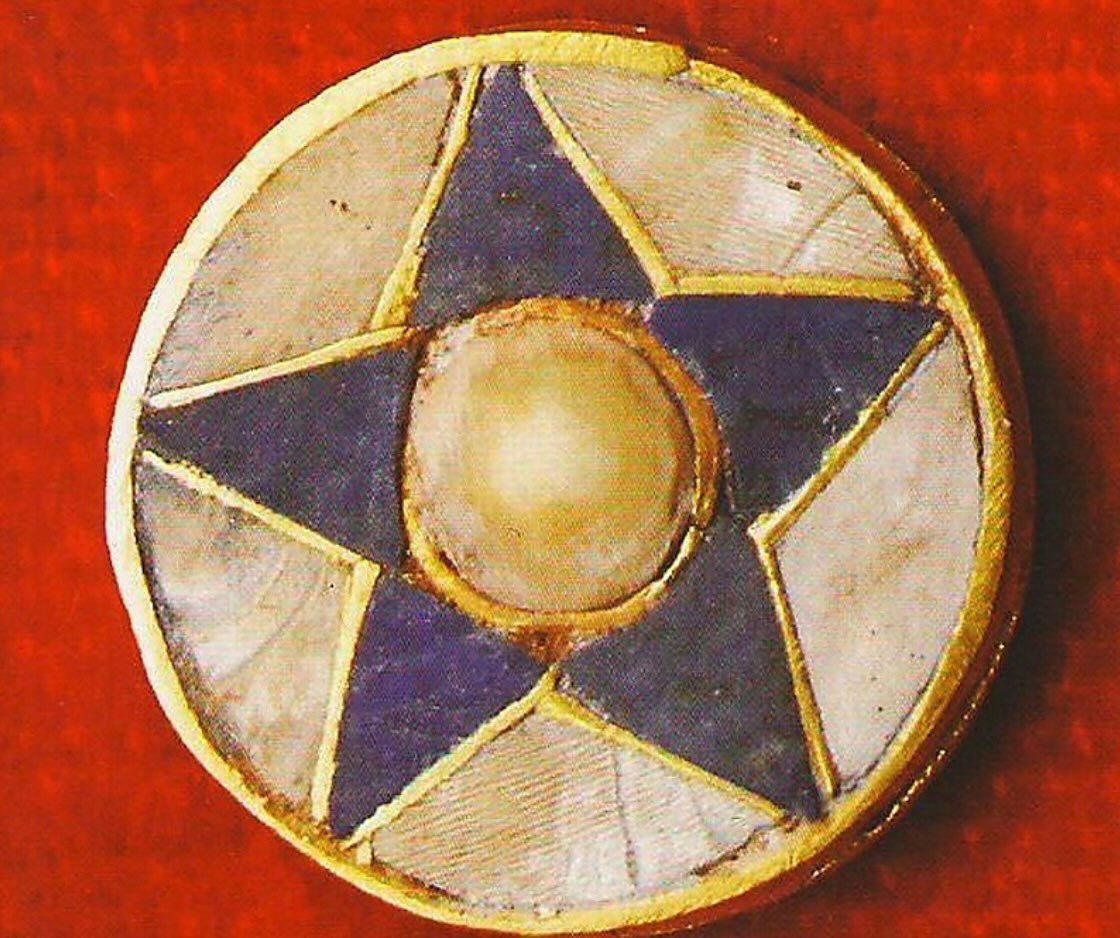









The five‑pointed star of the Saks is a unique artifact symbolizing supreme power and sacred status. It was discovered by an archaeological expedition led by A. T. Toleubayev in the royal burial mound of Baigetobe, located in the Shilikta Valley of the Zaysan District of the East Kazakhstan Region.
Scientific Significance and Features of the Artifact
Sacred symbolism of power. In the worldview of early nomads, the five‑pointed star embodied the concept of “an individual endowed with supreme spiritual power and supreme state authority.”
High level of jewellery craftsmanship. The artifact testifies to the outstanding development of jewellery art in the early Iron Age. In its manufacture, a horn base, inlaying with deep‑blue lapis lazuli, cladding with thin gold plates, and the technique of artistic embossing were skillfully combined.
A unique monument of Central Asia. For the 8th century BC, this artifact has no direct analogues in the territory of Central Asia. It is compelling evidence of the Saka people’s development of jewelry‑making skills and a complex social hierarchy, and it also represents a reference monument of the world’s cultural heritage.